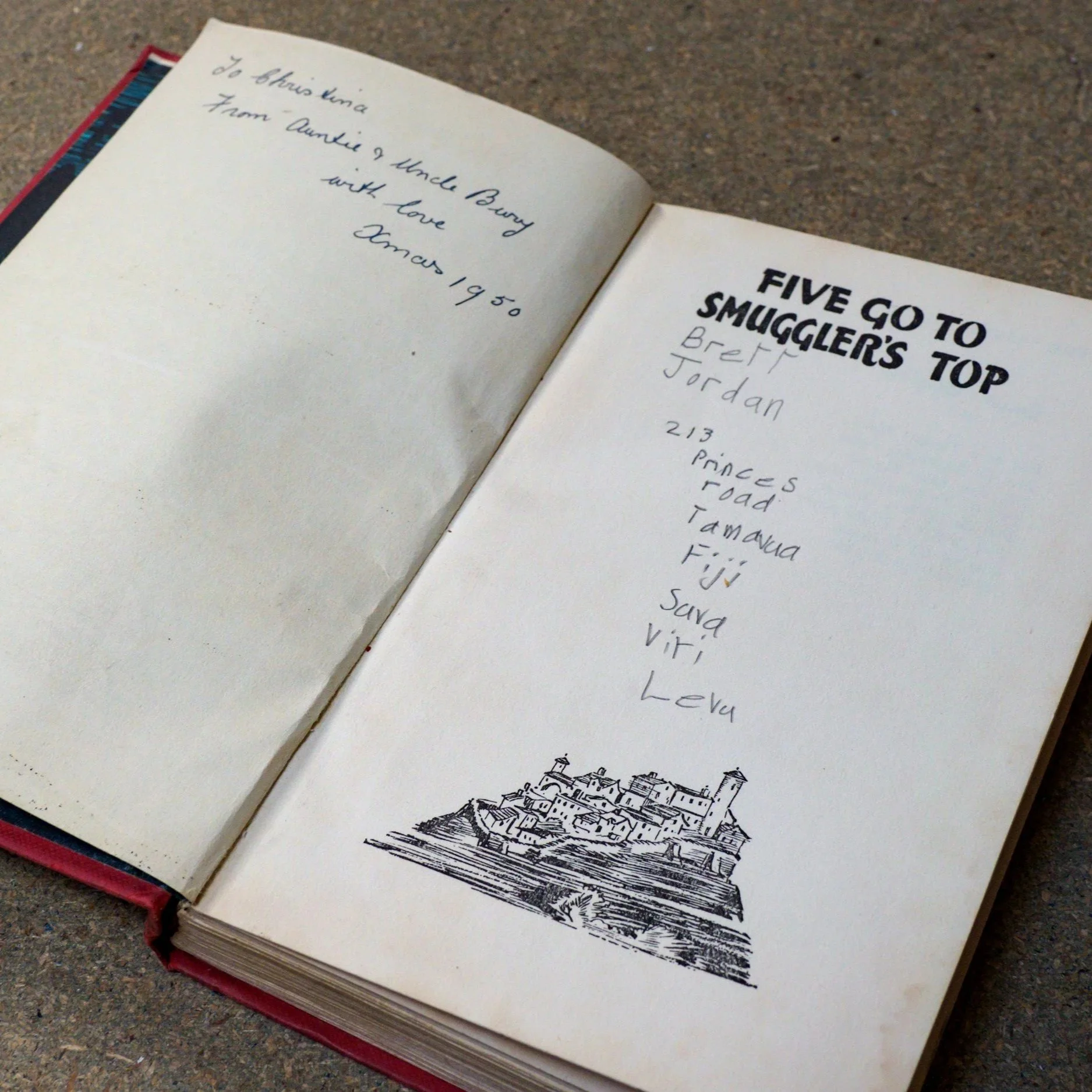
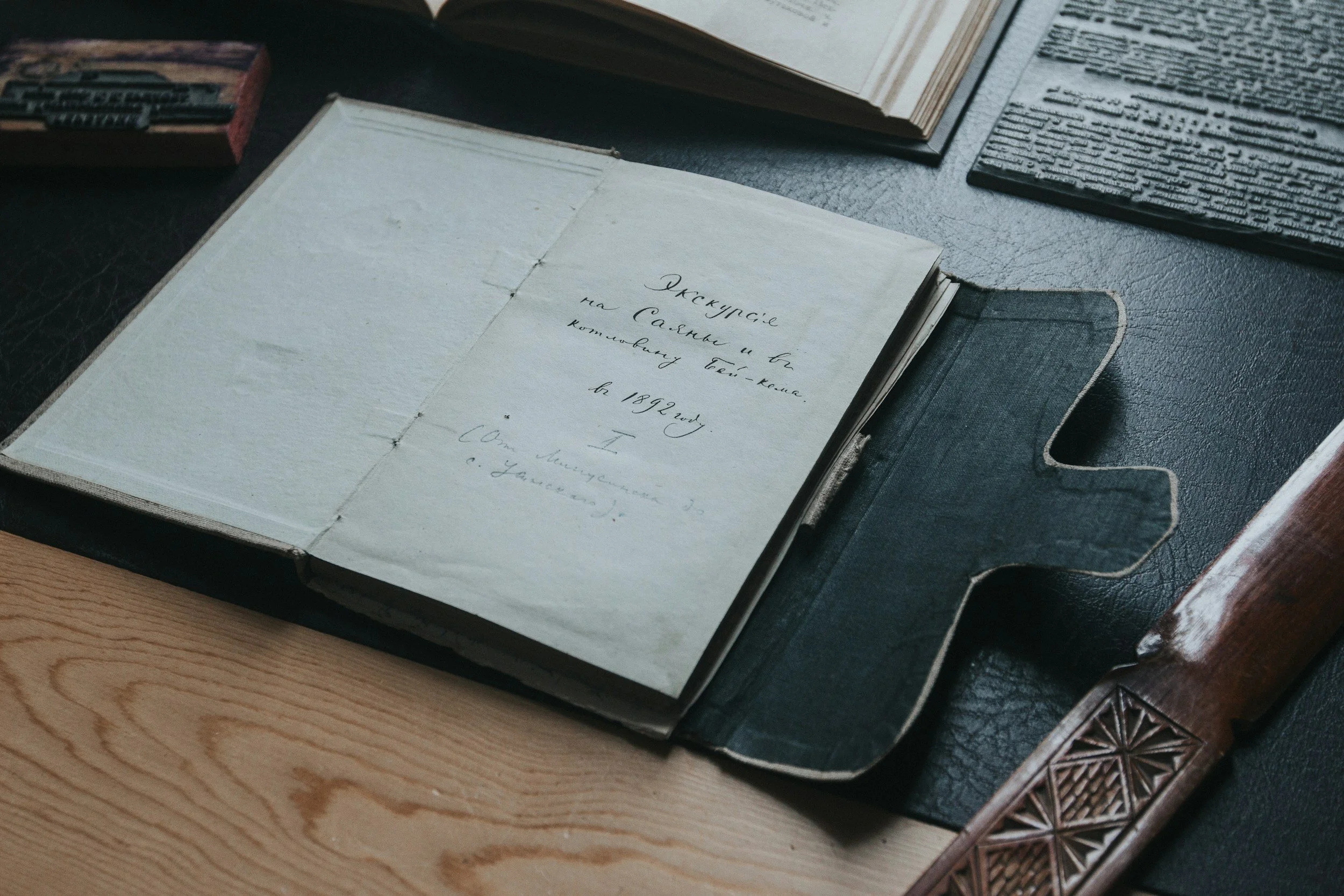
There is a special kind of magic reserved for the collector of vintage books. It’s the thrill of finding a rare first edition, the smell of old paper, the beauty of a decorative cover. But perhaps the most profound joy of all is a much quieter discovery: the faint, handwritten inscription on the flyleaf.
A name, a date, a short, heartfelt message. These simple marks transform a mass-produced object into a unique and deeply personal artefact. They are a direct, tangible link to the past, a whisper from a previous owner across the decades.
A Story in Every Thread
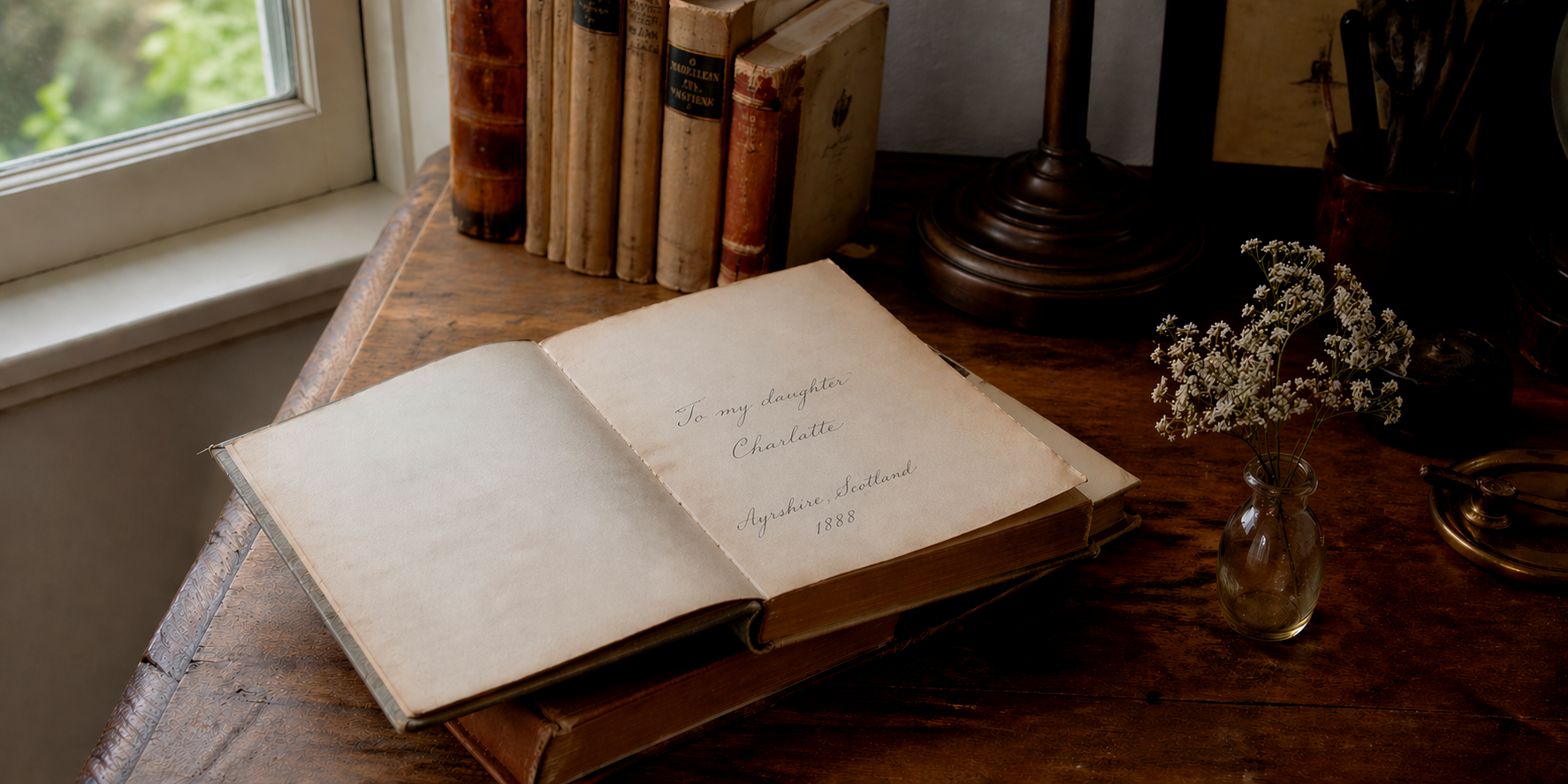
Recently, while cataloguing a collection of books from the late 19th century, we came across an inscription: a name and a town, “Ayrshire, Scotland, 1888.” We fell down a rabbit hole, tracing the name through public records, trying to imagine the life of the person who first held this book. What was their world like? Did they read this book by candlelight? Did it bring them comfort, escape, or knowledge?
The inscription turned the book from a simple object into a portal. It was no longer just a story to be read, but a story to be discovered.
Why We Cherish These Marks of Life:
They Prove a Human Connection: An inscription is proof that this book was held, loved, and gifted. It reminds us that we are part of a long chain of readers, connected by a shared story.
They Are Unique Historical Records: A date and a place can tell us so much. They anchor the book in a specific moment in time, offering clues about its journey and the social history of the era.
They Add a Layer of Romance and Mystery: Who was “Eleanor”? Why was this book gifted “With deepest affection”? These unanswered questions add a layer of romance and intrigue that is utterly captivating.
This article from The Antiquarian Bookseller’s Association of America explains the main differences between signed and inscribed books.
Should You Write in Your Own Books?
In an age of digital readers, the act of writing in a book feels almost rebellious. But we are firmly in favour of it. A book that is loved should show its life. So, write your name. Note the date you received it. Add a line about why it’s special to you. One day, a hundred years from now, you might just make a future collector’s day.
Next time you are browsing a vintage bookshop, take a moment to open the cover. Look for the faint pencil marks, the elegant cursive, the faded ink. That is where the real story often begins. It’s the story of a book that was not just owned, but truly loved.